How to Identify Victorian Brickwork
"Every wall tells a story of local clay, railway expansion, and Victorian ambition."
Why It Matters
To properly care for a building, you first need to understand what it is made of. The Victorian era (1837–1901) saw a massive boom in house building and a revolution in brick manufacturing.
Being able to identify the specific type of brick used on your home allows you to make informed decisions about cleaning methods, appropriate mortar types, and sourcing the right matches for repairs.
The Clues in the Wall
Identifying Victorian brickwork involves looking at several distinct characteristics:
- The Dimensions: The quintessential Victorian imperial brick is approximately 9 x 4½ x 3 inches. However, regional variations were common before standardization took hold late in the century.
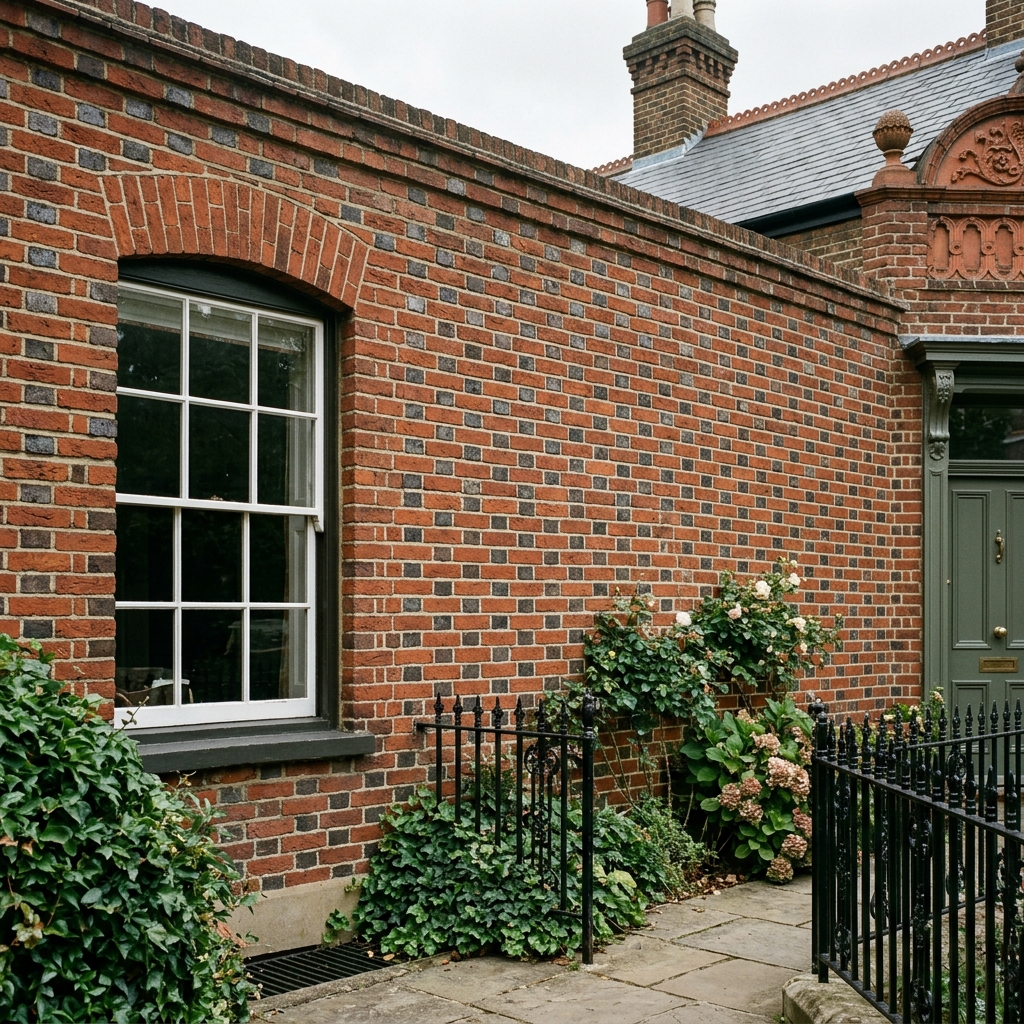
- The Bond Pattern: The way bricks are laid reveals the era and quality of the build. "Flemish Bond" (alternating headers and stretchers) is a hallmark of high-quality Victorian facades. "English Bond" (alternating courses of headers and stretchers) is stronger and often used on side elevations or industrial buildings.
- The Colour: The colour tells you where the clay came from. London Yellow Stocks contain chalk and town ash. Deep reds often come from the Midlands. Gault clays from the Home Counties produce pale, buff-coloured bricks.
- The Manufacturing Mark: Look closely at the surface. Does it have the irregular creases of a handmade brick ("creasing"), or the sharper, smoother edges of an early machine-pressed brick?
Common Mistakes to Avoid
Misidentifying bricks leads to poor restoration choices.
- Assuming all dirty bricks are naturally dark. Decades of urban pollution can turn bright yellow or red bricks completely black.
- Treating hard engineering bricks (often used at the damp-proof course level) the same as soft facing bricks.
- Using harsh chemical cleaners to "reveal" the colour, which often just burns the face off the brick entirely.
Professional Recommendations
If you are planning an extension, take the time to observe the bond pattern of your existing house. Continuing a Flemish bond onto a new extension looks infinitely better than switching lazily to a modern Stretcher bond.
Pay attention to architectural details like arches, corbels, and polychromatic (multi-coloured) brick patterns, which were highly popular in the mid-to-late Victorian period.
Frequently Asked Questions
Need professional advice?
Whether you need brick matching, lime pointing, or advice on a listed building project, our heritage specialists are ready to help.
Contact an Expert